Diagnosing Damp in Concrete Slabs: Why Surface Readings Alone Don’t Tell the Whole Story
When diagnosing dampness in a concrete slab, rather than just checking if it’s "dry enough", you need to distinguish between surface condensation, residual construction moisture and groundwater ingress (rising damp).
If the wrong diagnosis is made, it can lead to inappropriate remedial works, unnecessary cost and future problems with floor finishes.
At Redfearn Experts, we use a comprehensive diagnostic approach which combines surface equilibrium testing (Tramex Hygrohood) with deep internal moisture testing (Calcium Carbide Method) to map surface behaviour and accurately identify the origin of dampness.
Step 1: Surface Equilibrium Testing with the Tramex Hygrohood
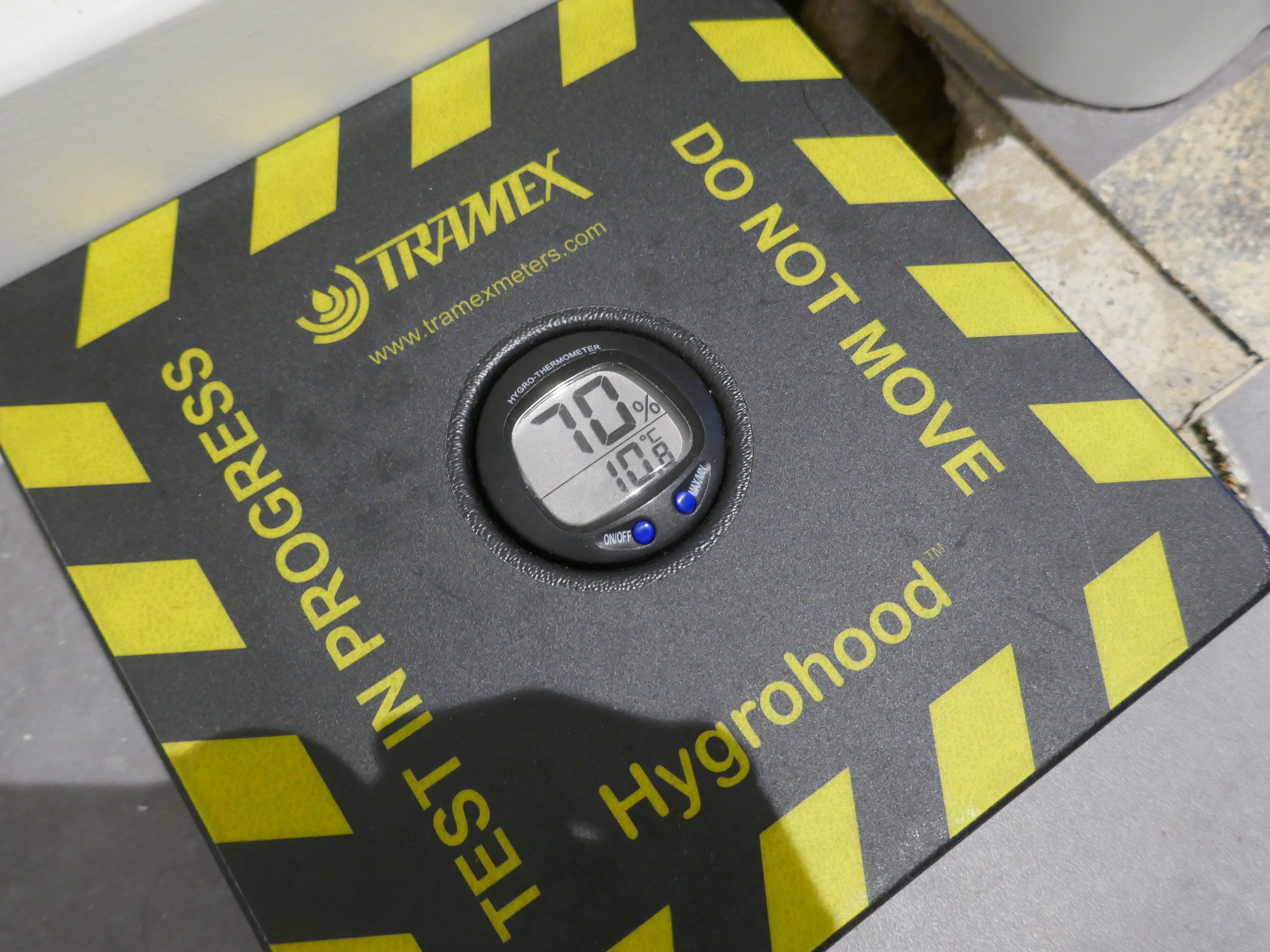
The Tramex Hygrohood is used to measure Equilibrium Relative Humidity (ERH). It is a non-destructive measurement of humidity on the surface of concrete flooring which identifies whether the slab is actively releasing moisture into the surrounding environment.
Identifying the correct test location
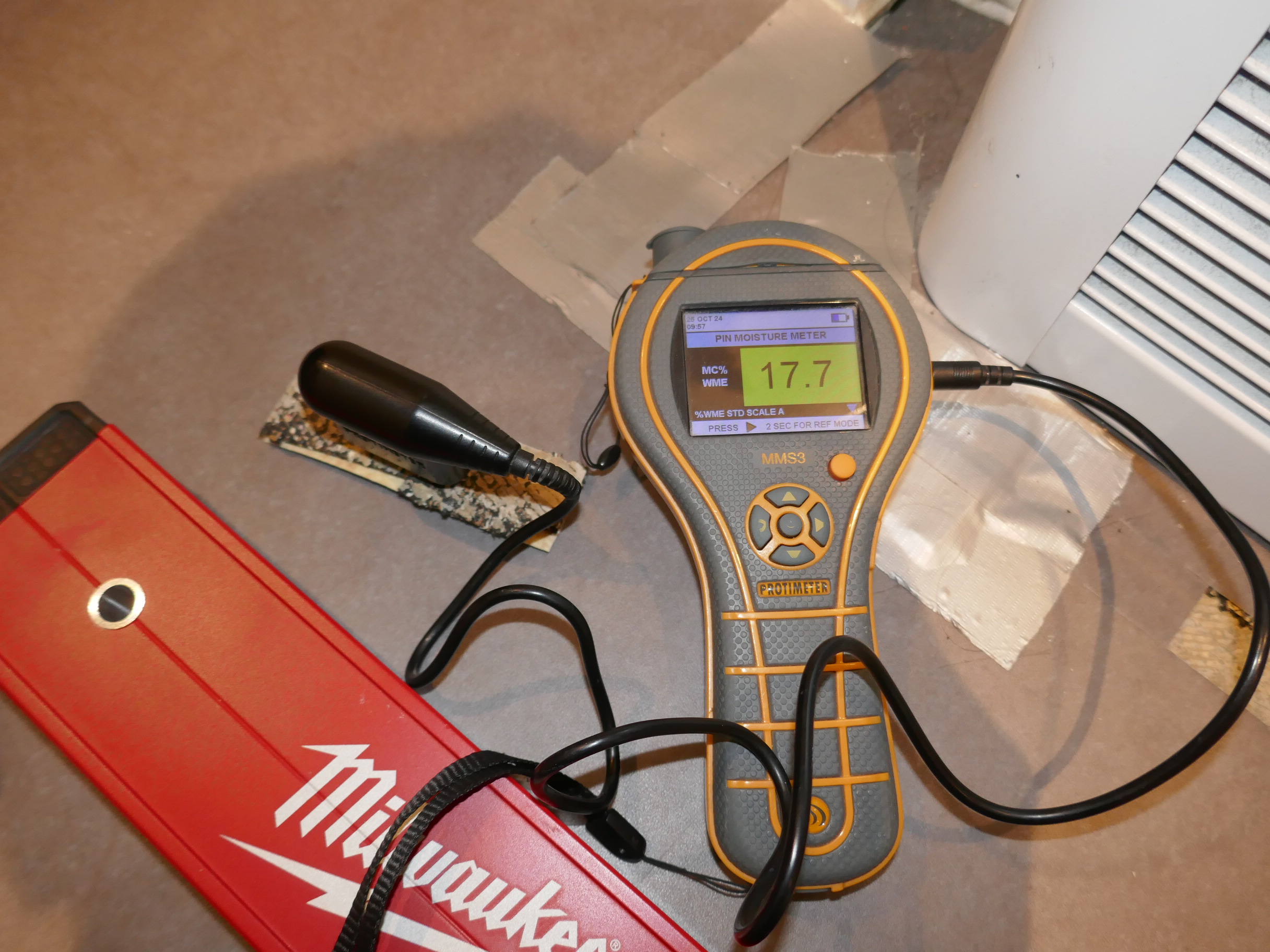
Before placing the Hygrohood, an electronic moisture meter is used to scan the floor and identify the areas with the highest moisture. This ensures testing is carried out at the worst affected locations.
Test procedure
The testing surface is cleaned and the Hygrohood is sealed to the concrete using butyl tape, creating a test chamber. It is then left for 72 hours to allow the air inside the hood to reach equilibrium with the concrete slab. This allows an accurate ERH reading to be taken.
Interpreting the results
RH above 75%: Indicates the slab is actively releasing moisture
Rapid increase in RH: Suggests a significant moisture source near the surface, such as condensation or a plumbing leak
Stable or lower RH: Suggests the surface may be relatively dry, but this does not rule out moisture deeper within the slab
This test provides crucial information about humidity and moisture at the surface but cannot determine the moisture levels from deeper within the slab.
Step 2: Internal Moisture Analysis Using the Calcium Carbide Method
Surface conditions can be influenced by ambient humidity, ventilation and temperature. In order to take a more accurate measurement, an assessment of the moisture content within the concrete itself is needed.
The Calcium Carbide Method (CM test) is widely recognised as one of the most reliable techniques for measuring internal moisture, because it takes readings from a physical sample of the concrete.
Precise sampling using drilling
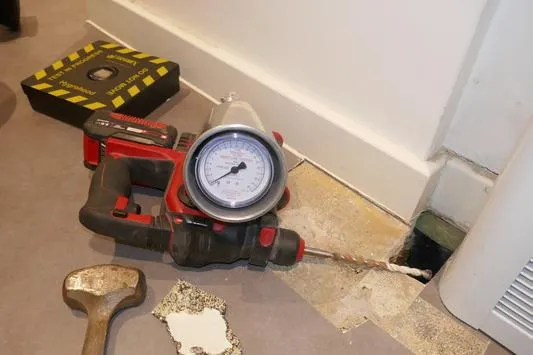
A slow-speed drill fitted with a 9mm–12mm masonry bit is used to extract a sample from the concrete slab. Slow speed drilling is important to avoid generating heat, which could evaporate moisture from the sample and therefore skew the test results.
As the first 10mm of dust can be affected by surface drying, it is discarded and samples are taken at various depths such as:
20mm below surface
50mm below surface
By testing at a range of depths, it helps to determine whether moisture is concentrated at the surface or rising from the ground.
The carbide reaction
The concrete sample is weighed and sealed within a pressure vessel containing calcium carbide reagent.
When shaken, the reagent reacts with moisture in the sample, producing acetylene gas. The resulting pressure increase provides a precise measurement of moisture content, expressed as percentage moisture content (%CM).
Why Both Tests Are Essential
Individually, each test provides useful information but together, they show the full moisture profile and identify its root cause.
By comparing surface ERH readings with internal CM readings, it is possible to pinpoint the source of dampness. For example:
A high (above 80%) hygrohood result and a low (below 2%) carbide test result suggests surface condensation or environmental moisture.
A high (above 85%( hygrohood results and a high (above 3%) carbide test result suggests rising damp, groundwater ingress or a significant leak
A moderate (75-80%) hygrohood result and a high (above 3%) carbide test result suggests residual construction moisture drying from within the slab
Why Accurate Diagnosis Matters
There is no one-size-fits-all solution when it comes to remedying the different issues caused by moisture. For example:
Condensation may be resolved through improved ventilation or environmental control
Residual moisture after construction work may simply require additional drying time
Rising damp may indicate failure of the damp proof membrane and require specialist intervention
Treating the wrong problem or using the wrong method can result in repeated floor failures, wasted money and ongoing disputes.
This is particularly important where accurate diagnosis and objective testing evidence is being used to support a legal claim for damp and mould in a housing disrepair case.
The Redfearn Experts Approach
At Redfearn Experts, we use a forensic methodology when investigating damp and moisture issues.
By combining:
Surface equilibrium testing
Internal moisture content analysis
Environmental assessment
Construction review
we can provide clear, evidence-based conclusions on the cause of dampness.
This allows property owners, contractors, insurers and legal professionals to make informed decisions based on reliable technical evidence.
Need Expert Advice?
If you are experiencing damp issues within a concrete floor slab, you need specialist testing and early diagnosis to prevent further issues.
Our expert surveyors provide independent moisture investigations, diagnostic testing and expert reports suitable for remedial planning, insurance claims, or legal proceedings.
Contact Redfearn Experts to discuss your case or call 0203 910 0882.