Can a Piece of Tissue Really Tell You if an Extractor Fan Is Working?
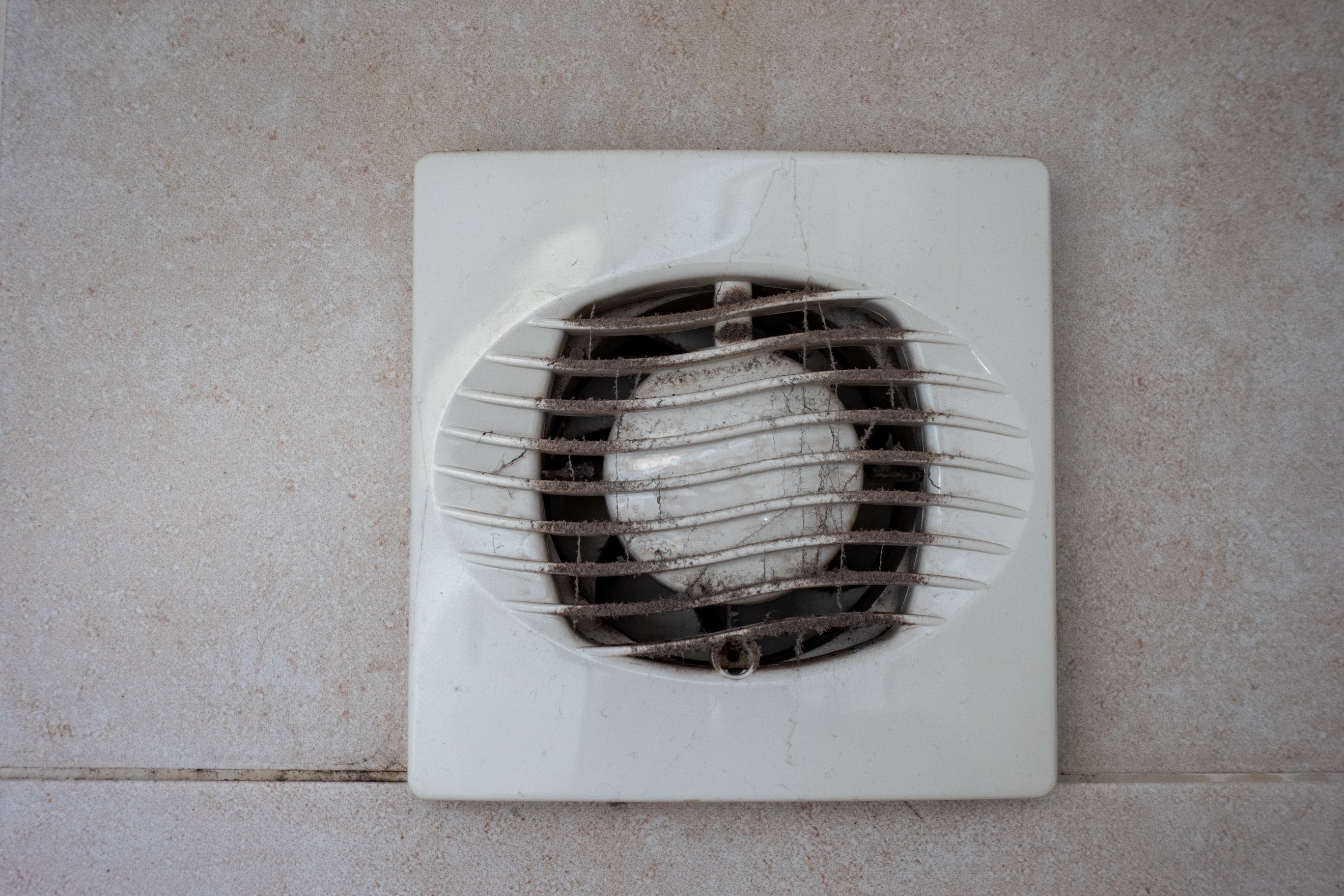
Extractor fans are a simple and popular piece of equipment to provide ventilation in bathrooms and kitchens where most heat and moisture are created. If steam isn’t extracted from these rooms it can settle on cold surfaces and start to create mould. Damp and mould is one of the most common sources of housing disrepair in rental properties. It is also common for extractor fans to stop working, and in circumstances where damp and mould have developed it is necessary to test an extractor fan to check whether it is operational, and whether it is effective in removing damp air from a room.
Many people rely on a simple tissue test to prove that an extractor fan works, but in this article we will explain why that is unreliable and insufficient, particularly when considering evidence being submitted to a court to support a housing disrepair claim.
In addition to removing moist air from a room, extractor fans also improve indoor air quality by removing strong odours and reducing humidity levels. But even if an extractor fan appears to be working, it is difficult for a landlord or tenant to establish whether it is effective in properly removing moisture and humidity from a room.
This can be critical in situations where damp and mould have developed and it is necessary to establish who is liable for this. It is common for an extractor fan to be the source of a damp and mould issue because it isn’t drawing sufficient air from a room, but where it is necessary to prove that, the tissue test is inadequate.
Why the tissue test is unreliable
The tissue test is the practice of holding a piece of tissue, or toilet paper, to the extractor fan and seeing whether the tissue is drawn into the fan. It is a quick and simple test which can tell you there is ‘some’ airflow from the fan, and that it is sucking air into the fan as it should do. However, it doesn’t measure the actual airflow volume (in litres/second) or tell us whether the airflow is sufficient to extract moist air from a room in order to maintain a suitable air quality. It also doesn’t tell us whether the extractor fan is working to its optimum efficiency, i.e. could it be blocked and using excessive power for the airflow it is creating?
In order to prevent moisture build-up, and therefore condensation, there are recommended extraction rates for fans in different rooms, such as in a kitchen or in a bathroom. It is important that these extraction levels are accurately measured in order to establish whether an extractor fan is actually doing its job. The tissue test won’t tell us this, and even if you think it is an effective test, the paper used from one day to the next could be a different thickness or porosity, so the results are misleading and certainly can’t be used in a professional or legal context.
If disputing a housing disrepair claim for damp and mould, we need to know if the extractor fan is producing the airflow volume required to clear moisture and condensation from a room and to prevent damp and mould forming.
How to accurately test an extractor fan
There are more effective tests than the tissue test when checking the functionality of an extraction fan. An effective fan should clear steam from a mirror after a hot shower in less than ten minutes, for example, while you can also check the exterior vent to monitor what airflow is being drawn out of the room. There are also audible signs that an extractor fan is working, it should hum steadily rather than rattle, grind or screech. But none of these give us quantifiable and reliable results.
Professionals producing an expert witness report to support a housing disrepair claim, will use an anemometer to measure the airflow from an extraction fan. This is a small, handheld instrument and the most common design is to have three or four cups on a rotating rod attached to the top of the instrument. These rotate according to the airflow they meet and convert this force into accurate and meaningful results, usually provided on a digital LCD screen.
Using this professional method to obtain quantifiable airflow measurements supports the credibility of a housing disrepair claim. It also provides robust and meaningful results which can prove liability one way or another, in terms of whether a property has an effective extraction system that can adequately remove moisture and condensation from a room.
Professional airflow testing from Redfearn Experts
At Redfearn Experts we can use specialist equipment and industry knowledge to establish whether an extraction fan is suitably operational. This means we can prove that an extraction fan is working to an appropriate capacity for a specific room, or not, as well as testing for energy efficiency. The tissue test is quick and simple and tells you an extraction fan is working, but it cannot help you beyond this.
We can provide specialist knowledge to support these findings, and can deliver all this in a professional report with detailed results and a holistic view of a property’s suitability, which can provide important evidence in formal legal proceedings. So if this is something you need, contact our team at Redfearn Experts today.