Avoiding Common Pitfalls When Submitting Expert Evidence
Housing disrepair disputes can be extremely complex. The expert evidence submitted has to adhere to strict legal standards in order to be accepted as legally binding, and to therefore be useful and valuable in resolving a dispute for a specific party. There are occasions where expert evidence falls short of these standards and in the following article we identify some of the common pitfalls to avoid when submitting expert evidence.
The importance of expert evidence in housing disrepair disputes
Expert evidence is the foundation upon which most housing disrepair cases are built, and on which their success depends. Expert evidence acts as the primary tool for determining liability in housing disrepair disputes and how the extent of a property defect has caused impacts such as ill health, discomfort or damage to the belongings of tenants. Where a dispute relates to an allegation that a property is unsafe or unhabitable, the production of an independent expert report is usually the means through which the dispute moves beyond subjective opinion, by providing unbiased and undisputable facts based on objective evidence.
Expert evidence is essential in a housing disrepair dispute because it:
Helps to establish liability – Expert evidence can determine the cause of an issue such as damp and mould, and directly link this to the legislative obligations of a landlord or tenant.
Define a scope of works – Expert reports usually include a detailed schedule of works defining what remedial work needs to be carried out in order that landlord obligations are met.
CPR part 35 compliance – The Civil Procedure Rules (CPR) part 35 for civil and county court cases require experts to provide independent and impartial evidence on matters that are accepted as being outside the general knowledge of the court judge, i.e. on technical matters involved in a housing disrepair dispute, such as electrical issues, or humidity or moisture levels.
Compensation – Expert evidence helps to quantify issues so that suitable compensation can be established for subjective impacts such as distress, discomfort and inconvenience.
Direct links – Expert evidence can prove that housing disrepairs have directly led to physical or mental health problems for a tenant, or not.
Common pitfalls to avoid when submitting expert evidence
Compliance – If a report does not comply with CPR part 35 it can be disregarded by the court. For example, all expert evidence reports must contain a statement that the expert understands their duty to the court, and this should be accompanied by a signed statement of truth.
Conflict of interest – An expert must be 100% impartial and independent, and must have no vested interest in the outcome of a dispute. This includes having fee arrangements which are dependent on the findings of a report, or continually being instructed by the same party. The CPR part 35 rules dictate that an expert witness has an overriding duty to the court, not to the instructing party, and therefore an expert witness report should remain unbiased and objective.
Template reports – Expert evidence reports must be tailored to specific inspections and should not show indications that they have been generically produced using cut and paste text from template reports. Expert evidence has to demonstrate that a thorough site visit has been conducted.
Determining liability – While expert evidence is used to identify defects and causations which lead to liability being determined, they should not determine liability explicitly in their report. This is the role of the court.
Unqualified – An expert witness must have appropriate qualifications and the necessary accreditations to provide opinions the court accepts as valid.
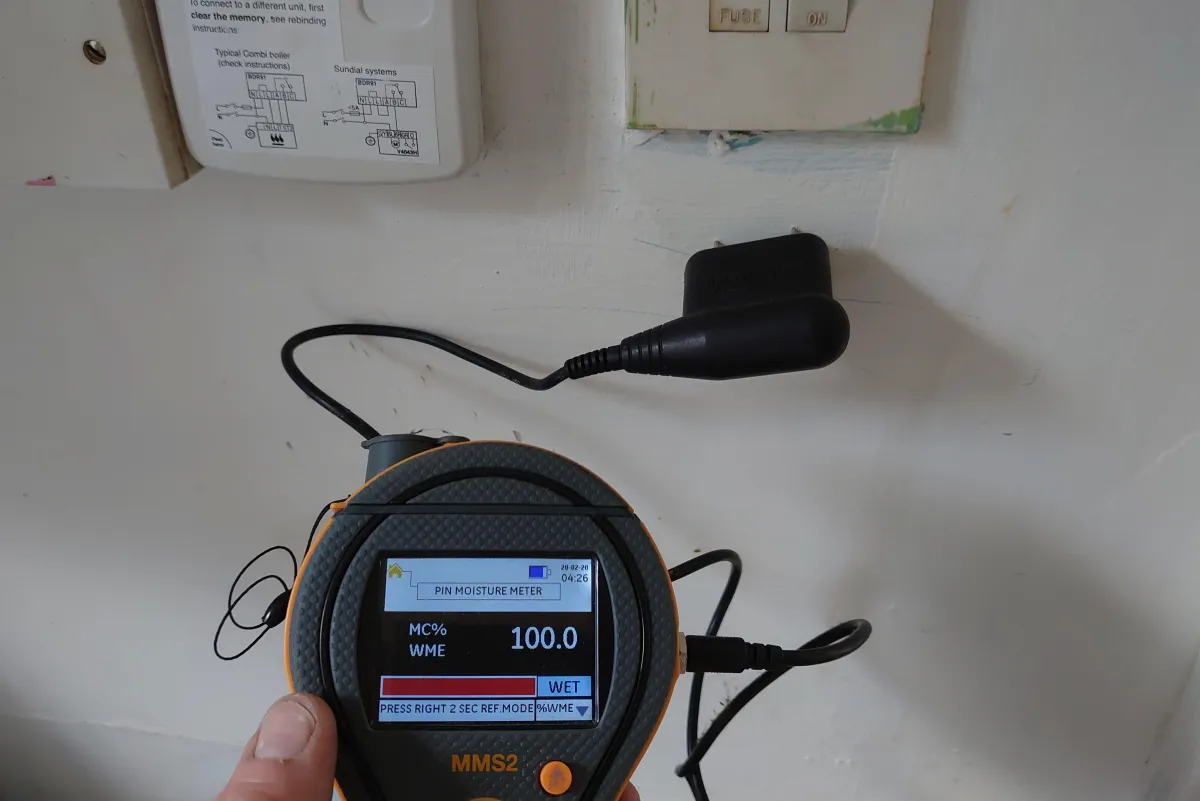
Not distinguishing between facts and assumptions - A professional expert witness report will support the facts it states with objective evidence, such as measurements, instrument readings and photographs of observed defects. These essentially verify the claims of either the tenant or the landlord. A report can also include assumptions, where evidence couldn’t be found, but this should be explicitly stated as such.
Sub-standard definition of remedial work – A professional expert witness report should include a clear and unambiguous definition of the scope of works. This means the report should clearly detail what has been found to be wrong in the property, why this is wrong and what should be done to correct it. Including clear and concise detail on this entire scope, rather than vague and generic recommendations, helps to validate all elements of the report.
A professional expert witness report should focus on causation, provide clear evidence, be fully compliant and remain fully independent. Properly understanding the role of the expert witness is essential, as well as being able to align this with the respective responsibilities of both the landlord and the tenant.
At Redfearn Experts we have a successful track record of providing supporting expert evidence for a wide range of clients involved in housing disrepair disputes, so if you need fully objective evidence based on strong technical knowledge and a specialist understanding of compliance needs, contact Redfearn Experts today.